
Les hôpitaux sont des établissements essentiels pour protéger la santé publique et assurer les soins médicaux. Alors que les salles de consultation, les blocs opératoires et les services de stérilisation attirent souvent le plus d’attention, la blanchisserie hospitalière joue également un rôle important dans la prévention des infections et le fonctionnement quotidien de l’hôpital. Les textiles médicaux tels que les draps, tenues de patients, champs opératoires, serviettes et uniformes du personnel de santé peuvent être exposés au sang, aux fluides corporels, aux micro-organismes et à d’autres contaminants pendant leur utilisation. Pour cette raison, un système de matériel de blanchisserie hospitalière correctement conçu doit favoriser une manipulation sûre du linge, un lavage efficace, le séchage, la finition et une séparation claire entre les textiles sales et propres.
- De quels équipements une blanchisserie hospitalière a-t-elle besoin ?
- Laveuses-essoreuses pour hôpitaux
- Laveuses-essoreuses médicales à barrière
- Séchoirs rotatifs pour hôpitaux
- Équipements de repassage et de pliage
- Équipements auxiliaires pour blanchisseries médicales
- Équipements de blanchisserie hospitalière selon la taille de l’établissement
- Agencement et flux de travail d’une blanchisserie hospitalière
- Comment choisir les équipements de blanchisserie hospitalière
- Questions fréquentes
De quels équipements une blanchisserie hospitalière a-t-elle besoin ?
Une blanchisserie hospitalière professionnelle nécessite normalement bien plus qu’une machine à laver. Un système complet peut comprendre des équipements pour la réception, le tri, le lavage, l’essorage, le séchage, le repassage, le pliage, le transport, le stockage et la gestion des textiles médicaux.
Les équipements courants de blanchisserie hospitalière comprennent :
- Laveuses-essoreuses entièrement automatiques
- Laveuses-essoreuses médicales à barrière
- Séchoirs rotatifs industriels
- Calandres
- Engageuses automatiques de linge
- Plieuses automatiques
- Équipements de finition des vêtements
- Systèmes automatiques de dosage des produits chimiques
- Chariots séparés pour linge sale et propre
- Tables de tri
- Systèmes de traitement de l’eau
- Équipements de traitement ou de prétraitement des eaux usées lorsque cela est requis
La configuration exacte dépend du volume quotidien de linge, de la taille de l’hôpital, des catégories de textiles, du risque de contamination, de l’espace disponible, des conditions des utilités et des exigences locales applicables en matière d’hygiène hospitalière.
Laveuses-essoreuses pour hôpitaux : équipements centraux de lavage
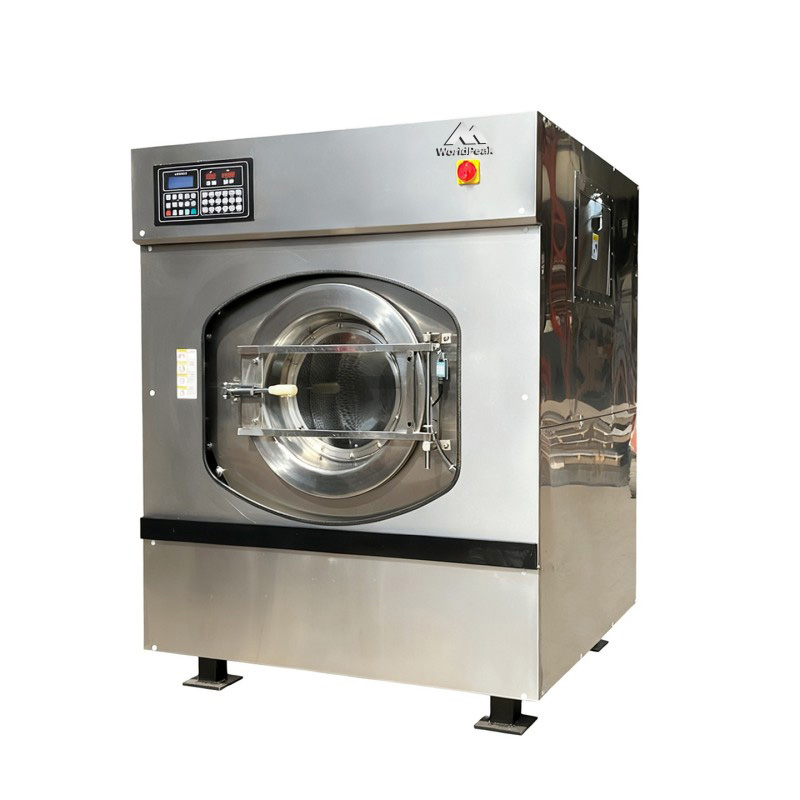
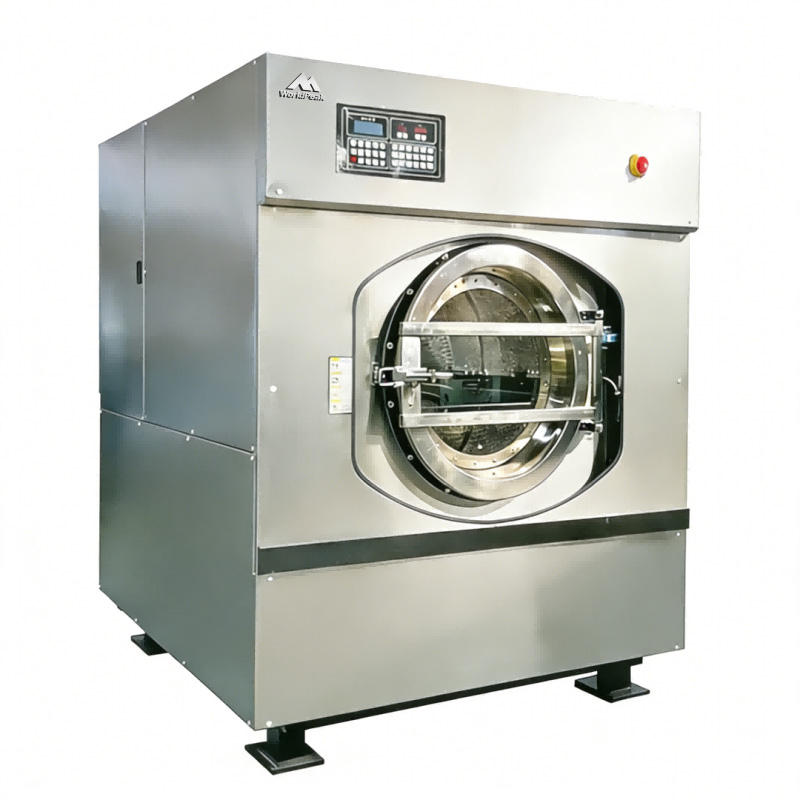
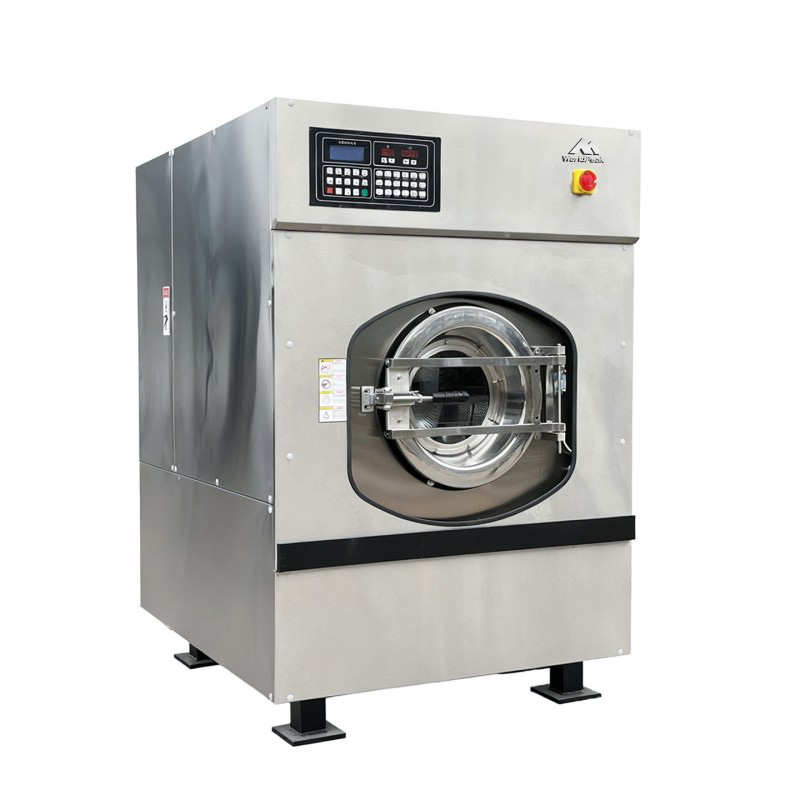
La laveuse-essoreuse est la machine centrale d’une blanchisserie hospitalière. Elle combine lavage, rinçage, vidange et essorage à grande vitesse dans un seul équipement et sert à traiter le linge de lit, les vêtements de patients, les serviettes, les uniformes et d’autres textiles de santé réutilisables.
Laveuses-essoreuses conventionnelles entièrement automatiques
Les laveuses-essoreuses conventionnelles utilisent généralement une conception à porte unique pour le chargement et le déchargement. Elles peuvent convenir aux applications de blanchisserie médicale à moindre risque, aux petites cliniques, aux structures ambulatoires ou aux catégories de textiles ne nécessitant pas de séparation physique entre les côtés sale et propre.
Les machines modernes peuvent proposer des réglages programmables pour :
- Température de l’eau
- Temps de lavage
- Niveau d’eau
- Vitesse du tambour
- Fréquence des rinçages
- Dosage des produits chimiques
- Vitesse d’essorage
Différents programmes peuvent être créés pour le linge de service, les uniformes, les serviettes, les vêtements de patients et d’autres catégories textiles.
Construction en acier inoxydable
Les laveuses-essoreuses hospitalières utilisent couramment de l’acier inoxydable résistant à la corrosion pour le tambour et les autres composants en contact avec l’eau. Cela est particulièrement important dans les établissements où les machines sont fréquemment exposées aux détergents, alcalins, agents de blanchiment, désinfectants et cycles répétés de lavage à haute température.
Laveuses-essoreuses médicales à barrière
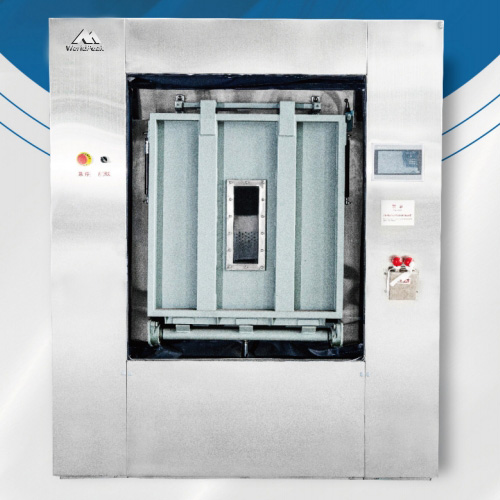
Une laveuse-essoreuse médicale à barrière est conçue pour assurer une séparation physique entre les zones de linge contaminé et de linge propre.
Contrairement à une machine conventionnelle, une laveuse à barrière possède deux portes et est normalement installée à travers une cloison.
Fonctionnement d’une laveuse à barrière
Les textiles sales sont chargés par la porte située du côté contaminé. Une fois le cycle programmé de lavage, rinçage et essorage terminé, les textiles propres sont déchargés par une porte distincte du côté propre.
Cette configuration traversante contribue à réduire les croisements inutiles entre les zones de manipulation du linge sale et du linge propre.
Où les laveuses à barrière sont-elles couramment utilisées ?
Les laveuses-essoreuses à barrière peuvent être envisagées pour :
- Grands hôpitaux généraux
- Hôpitaux de maladies infectieuses
- Centres de blanchisserie médicale
- Installations de traitement des textiles de santé
- Installations nécessitant des flux séparés pour le linge sale et propre
Le besoin d’équipements à barrière doit être déterminé selon les exigences locales applicables en matière d’hygiène, de contrôle des infections et de conception des installations, plutôt que de supposer qu’une même configuration est obligatoire pour tous les établissements médicaux.
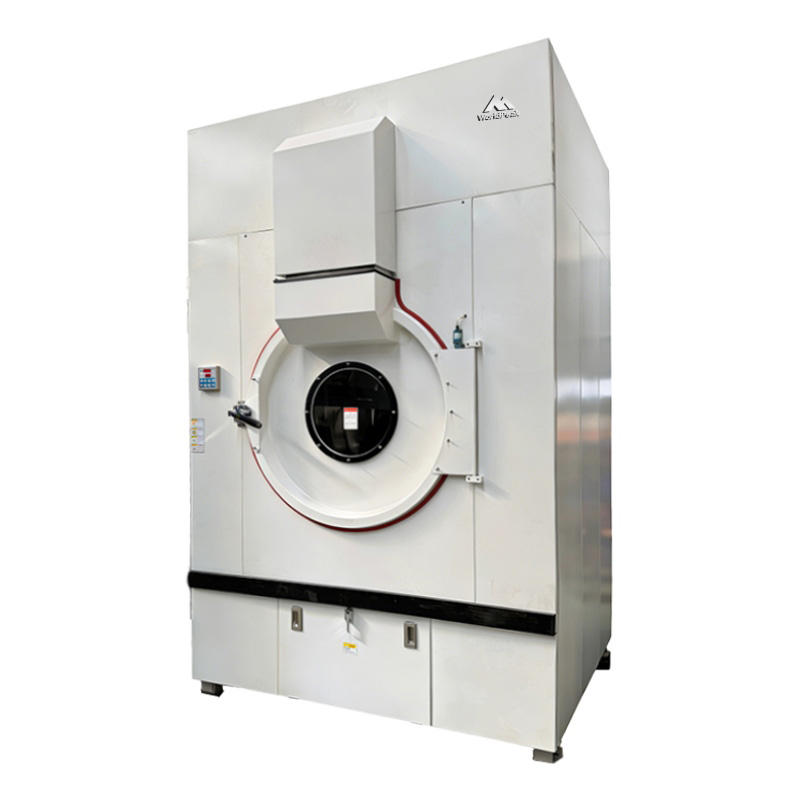
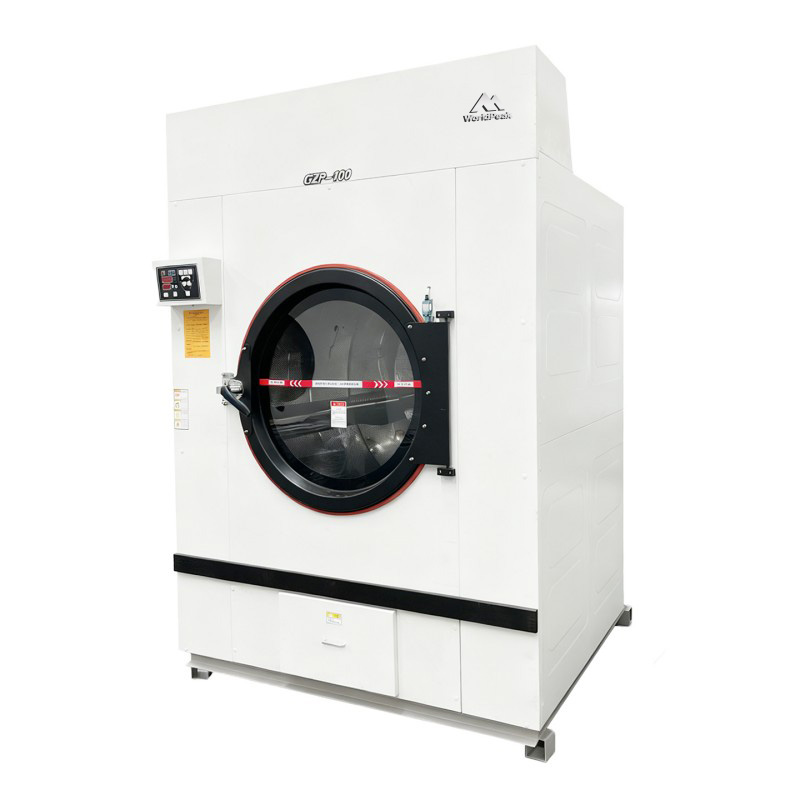
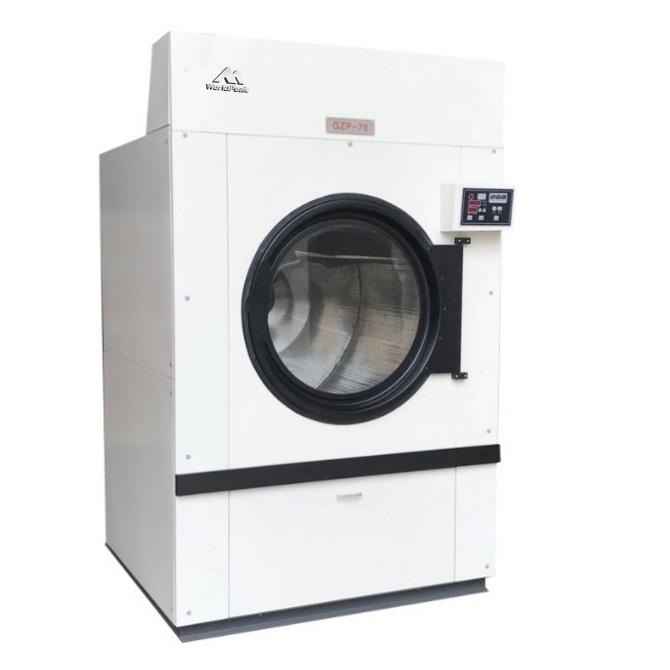
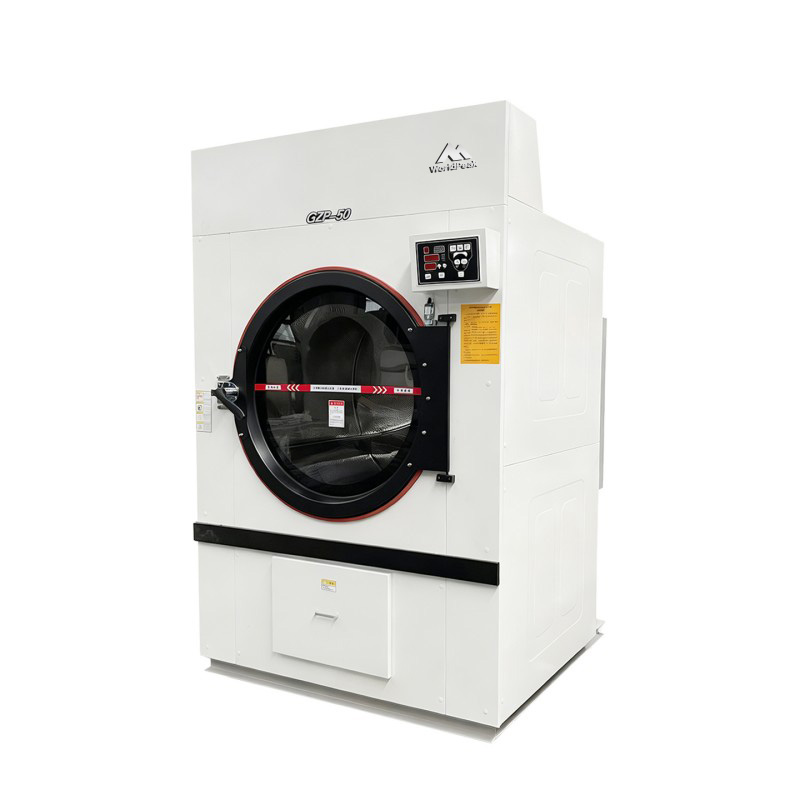
Séchoirs rotatifs industriels pour blanchisserie hospitalière
Après le lavage et l’essorage à grande vitesse, de nombreux textiles de santé nécessitent encore un séchage complémentaire. Les séchoirs rotatifs industriels réduisent l’humidité résiduelle et assurent un délai de remise en service du linge plus prévisible, indépendamment des conditions météorologiques ou du séchage extérieur.
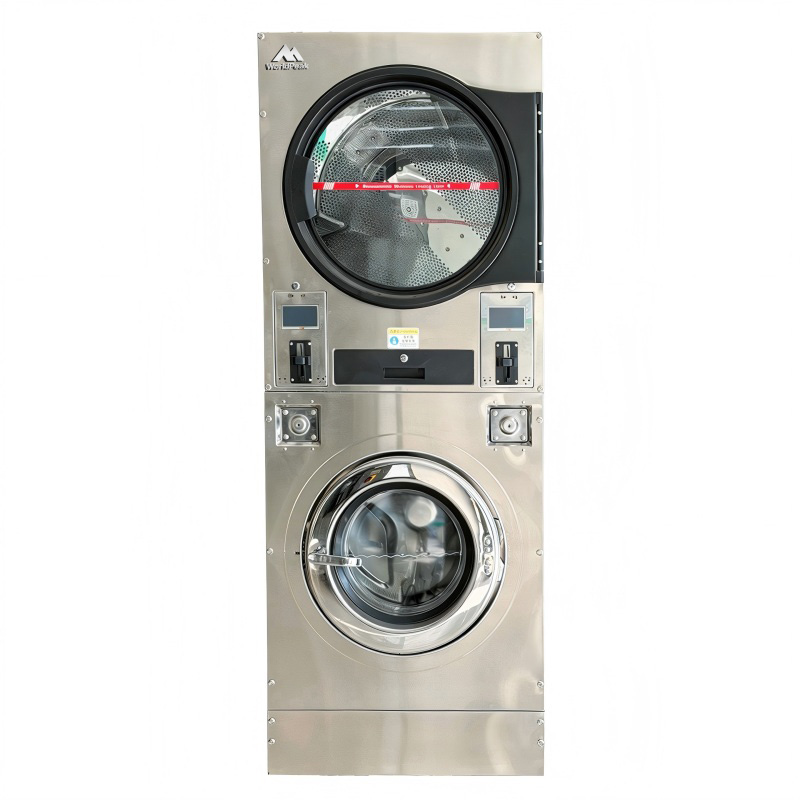
Séchoirs pour petites structures médicales
Les petites cliniques ou institutions de santé ayant un faible volume quotidien peuvent utiliser des séchoirs rotatifs commerciaux de 30 à 50 kg adaptés à leurs laveuses-essoreuses.
Séchoirs pour grands hôpitaux
Les grands hôpitaux et blanchisseries médicales centralisées peuvent nécessiter des séchoirs de 80 à 120 kg ou davantage, souvent installés en plusieurs unités afin de correspondre à la capacité de lavage.
Facteurs importants pour le choix d’un séchoir
Lors du choix de séchoirs rotatifs hospitaliers, prenez en compte :
- Capacité nominale de séchage
- Mode de chauffage
- Conception du flux d’air
- Contrôle de la température
- Vitesse de séchage
- Détection de l’humidité
- Consommation d’énergie
- Adéquation de la capacité avec la section de lavage
Lorsque des procédures spécifiques de traitement textile ou d’hygiène exigent des conditions de séchage contrôlées, le cycle du séchoir doit être configuré selon le type de textile et le protocole de blanchisserie hospitalière applicable.
Équipements de repassage et de pliage pour linge médical
Après le séchage, les textiles de santé peuvent nécessiter repassage, finition, pliage et empilage avant d’être retournés aux services cliniques ou placés en stockage propre.
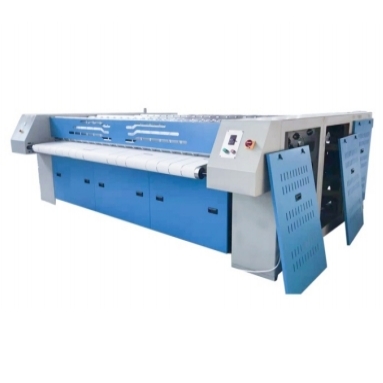
Calandres
Les calandres sont principalement utilisées pour les grands textiles plats tels que :
- Draps
- Housses de couette
- Taies d’oreiller
- Linge médical plat
- Certains types de textiles chirurgicaux
La machine utilise des rouleaux chauffés ou des surfaces de repassage pour sécher, lisser et finir le linge en continu.
Calandres à un rouleau et à plusieurs rouleaux
Les petites blanchisseries de santé peuvent utiliser des modèles à un rouleau, tandis que les grands hôpitaux et centres de blanchisserie médicale peuvent installer des calandres à deux ou plusieurs rouleaux afin d’augmenter le débit.
Équipements de finition des vêtements
Les uniformes de santé, vêtements de patients, blouses d’isolement et autres vêtements de forme ne peuvent pas toujours être traités efficacement sur une calandre.
Selon l’établissement, ces textiles peuvent être finis avec :
- Presses à vêtements
- Tables de repassage aspirantes
- Tunnels de finition pour vêtements
- Autres équipements spécialisés de finition
Plieuses automatiques
Les plieuses automatiques peuvent être raccordées directement aux lignes de calandrage afin de plier, compter, empiler et organiser le linge fini.
Dans les hôpitaux à fort volume et les blanchisseries centralisées, le pliage automatique réduit les manipulations manuelles répétitives et améliore la régularité du stockage et de la distribution du linge propre.
Équipements auxiliaires pour blanchisseries hospitalières
Une exploitation complète de blanchisserie médicale dépend également de systèmes auxiliaires assurant la séparation des textiles, le contrôle chimique, le transport, la qualité de l’eau et la gestion des eaux usées.
Tables de tri du linge
Les textiles sales doivent être classés avant lavage selon les procédures de blanchisserie de l’établissement. Les catégories de tri peuvent inclure les différents types de textiles, niveaux de salissure, services ou groupes de risque de contamination.
Chariots séparés pour linge sale et propre
Des chariots distincts peuvent être affectés aux textiles sales et propres. Un code couleur, des étiquettes, des chariots fermés ou d’autres méthodes d’identification peuvent aider à éviter les utilisations croisées accidentelles.
Système automatique de dosage des produits chimiques
Un système automatique de dosage distribue des quantités prédéfinies de détergent, alcalin, agent de blanchiment, neutralisant, désinfectant, assouplissant et autres produits chimiques selon le programme de lavage.
Cela peut améliorer la régularité du lavage et réduire les erreurs de dosage liées à l’ajout manuel des produits chimiques.
Équipements de traitement de l’eau
La dureté de l’eau et sa teneur en minéraux peuvent affecter l’efficacité des détergents, l’apparence des textiles et l’état des équipements. Un adoucissement ou un traitement de l’eau peut donc être utile lorsque la qualité de l’eau entrante n’est pas adaptée au traitement professionnel du linge.
Gestion des eaux usées
Les eaux usées d’une blanchisserie hospitalière peuvent contenir des détergents, des peluches, des matières en suspension, des résidus organiques et d’autres contaminants. Les exigences de traitement et de rejet varient selon les régions ; les établissements de santé doivent donc vérifier les réglementations environnementales locales applicables lors de la planification du projet.
Configuration des équipements de blanchisserie hospitalière selon la taille de l’établissement
Les équipements de blanchisserie hospitalière doivent être sélectionnés selon le volume quotidien réel de traitement plutôt que d’utiliser le même système pour tous les établissements.
Petites cliniques et hôpitaux privés
Les établissements traitant moins d’environ 300 kg de linge par jour peuvent utiliser un système simplifié tel que :
- Une laveuse-essoreuse entièrement automatique de 30 kg
- Un séchoir rotatif de capacité correspondante
- Une table de repassage de base ou un système de finition compact
- Table de tri du linge
- Chariots de transport du linge séparés
Les besoins réels en équipements doivent toutefois rester fondés sur la catégorie de textiles, les procédures d’hygiène et les normes locales de santé.
Hôpitaux de taille moyenne
Les hôpitaux traitant environ 500 à 1 000 kg de linge par jour peuvent nécessiter :
- Une ou plusieurs laveuses-essoreuses conventionnelles
- Une ou plusieurs laveuses-essoreuses à barrière si nécessaire
- Un séchoir rotatif de 50 kg ou une capacité de séchage supérieure
- Calandre à un ou deux rouleaux
- Dosage automatique des produits chimiques
- Équipements séparés de manutention du linge sale et propre
Grands hôpitaux généraux et centres de blanchisserie médicale
Les établissements traitant plus d’environ 1 500 kg de linge par jour peuvent nécessiter une ligne de production plus automatisée, comprenant :
- Plusieurs laveuses-essoreuses à barrière
- Séchoirs rotatifs de grande capacité
- Engageuses automatiques de linge
- Calandres multi-rouleaux
- Plieuses automatiques
- Équipements de finition des vêtements
- Dosage automatique des produits chimiques
- Systèmes de traitement de l’eau
- Équipements dédiés au transport et au stockage du linge
Pour des volumes quotidiens très élevés, un tunnel de lavage ou un système de lavage continu par lots peut également être envisagé lorsque la demande de production de l’établissement est suffisamment stable.
Agencement et flux de travail d’une blanchisserie hospitalière
Le choix des équipements et l’agencement de la blanchisserie doivent être planifiés ensemble. Même des machines de haute qualité ne peuvent pas assurer un flux efficace si les textiles propres et sales se croisent régulièrement.
Flux unidirectionnel type d’une blanchisserie
Un processus de blanchisserie hospitalière peut suivre la séquence générale suivante :
- Réception des textiles sales
- Classification et tri
- Lavage et essorage
- Séchage
- Repassage ou finition des vêtements
- Pliage et empilage
- Contrôle du linge propre
- Stockage propre
- Distribution
Séparation des zones propre et sale
Lorsque le plan de contrôle des infections de l’établissement l’exige, une séparation physique ou opérationnelle doit être mise en place entre les zones de manipulation du linge sale et celles de traitement du linge propre.
Les laveuses-essoreuses à barrière sont particulièrement utiles lorsqu’un flux cloisonné est requis, car elles permettent aux textiles de traverser l’étape de lavage sans être déchargés de nouveau dans la zone contaminée.
Éviter les croisements de flux
L’agencement doit minimiser :
- Le croisement des chariots propres et sales
- Les manipulations manuelles inutiles
- Le stockage de textiles sales à proximité des textiles propres
- Les déplacements répétés entre des zones de travail incompatibles
Comment choisir les équipements de blanchisserie hospitalière
1. Calculer le volume quotidien de linge
Estimez le poids sec total des textiles traités chaque jour, y compris le linge de lit, les serviettes, les vêtements de patients, les uniformes du personnel, les textiles chirurgicaux et autres articles réutilisables.
2. Classer les types de textiles
Les différentes catégories de textiles peuvent nécessiter des programmes de lavage, méthodes de séchage, procédés de finition et contrôles d’hygiène différents.
3. Déterminer si le lavage à barrière est nécessaire
Évaluez les exigences de contrôle des infections de l’établissement et les normes locales afin de déterminer s’il convient d’installer des laveuses-essoreuses conventionnelles ou à barrière.
4. Adapter la capacité de lavage et de séchage
La section de séchage doit pouvoir absorber la production des laveuses. Une capacité de séchage insuffisante peut créer des goulots d’étranglement de linge humide et ralentir toute la ligne de production.
5. Adapter la section de finition
Les systèmes de lavage à grande capacité doivent être soutenus par une capacité suffisante de repassage et de pliage, en particulier dans les hôpitaux traitant de grandes quantités de linge de lit.
6. Confirmer les exigences en utilités
Avant de sélectionner les équipements, confirmez :
- Capacité électrique
- Alimentation en eau
- Évacuation
- Disponibilité de vapeur
- Alimentation en gaz le cas échéant
- Ventilation
- Besoins en air comprimé
7. Envisager l’automatisation
Le dosage automatique des produits chimiques, l’engagement du linge, le pliage, le convoyage et le déchargement peuvent réduire les manipulations répétitives et être utiles dans les grands hôpitaux et les blanchisseries médicales centralisées.
8. Évaluer le service après-vente
Les blanchisseries hospitalières fonctionnent souvent selon des calendriers de livraison fixes. Les arrêts d’équipement peuvent affecter l’approvisionnement en linge des services cliniques ; la disponibilité des pièces détachées, l’assistance technique, la maintenance et la couverture de garantie doivent donc être prises en compte lors de l’achat.
Questions fréquentes sur les équipements de blanchisserie hospitalière
Quels équipements sont nécessaires dans une blanchisserie hospitalière ?
Une blanchisserie hospitalière peut nécessiter des laveuses-essoreuses, des laveuses-essoreuses à barrière, des séchoirs rotatifs, des calandres, des plieuses, des équipements de finition des vêtements, des systèmes de dosage chimique, des chariots à linge, des tables de tri, un traitement de l’eau et d’autres systèmes auxiliaires.
Qu’est-ce qu’une laveuse-essoreuse médicale à barrière ?
Une laveuse-essoreuse à barrière est une machine à laver industrielle à double porte installée entre les zones de linge sale et propre. Les textiles sont chargés d’un côté puis déchargés de l’autre après lavage, assurant une séparation physique entre les deux zones.
Tous les hôpitaux ont-ils besoin de laveuses-essoreuses à barrière ?
Pas nécessairement. Les besoins en équipements varient selon la taille de l’hôpital, le risque de contamination des textiles, l’agencement de la blanchisserie et les réglementations locales applicables. Les établissements doivent déterminer la nécessité d’un équipement à barrière selon leurs exigences de contrôle des infections.
Quelle capacité de laveuse-essoreuse convient à un hôpital ?
Les petites structures peuvent utiliser des machines de 30 kg ou 50 kg, tandis que les hôpitaux moyens et grands peuvent nécessiter des machines de 70 kg, 100 kg ou plusieurs unités de grande capacité. La taille correcte dépend du poids quotidien du linge sec et des heures de fonctionnement.
Une blanchisserie hospitalière peut-elle utiliser un tunnel de lavage ?
Oui. Les tunnels de lavage ou laveuses continues par lots peuvent convenir aux grandes blanchisseries hospitalières centralisées ayant des besoins stables et importants de traitement textile.
Quelle est la différence entre une laveuse commerciale et une laveuse hospitalière à barrière ?
Une laveuse commerciale conventionnelle utilise normalement un seul côté pour le chargement et le déchargement, tandis qu’une laveuse à barrière possède des portes séparées côté sale et côté propre afin de permettre un flux traversant.
Les blanchisseries hospitalières ont-elles besoin d’un dosage automatique des produits chimiques ?
Le dosage automatique est utile pour maintenir des formules de lavage constantes et réduire les erreurs de dosage manuel. Son intérêt devient particulièrement important dans les établissements qui traitent de nombreuses charges chaque jour.
Quel type de séchoir convient au linge hospitalier ?
Les séchoirs rotatifs industriels doivent être choisis selon le type de textile, la production des laveuses, la vitesse de séchage requise, la source de chauffage et les procédures de blanchisserie applicables. Plusieurs séchoirs peuvent être nécessaires dans les établissements à fort volume.
Le linge hospitalier nécessite-t-il des équipements de repassage et de pliage ?
Les textiles plats tels que les draps et taies d’oreiller sont couramment traités avec des calandres et des plieuses. Les vêtements tels que les uniformes et tenues de patients peuvent nécessiter des équipements distincts de finition.
Comment transporter le linge hospitalier propre et sale ?
Les établissements utilisent couramment des chariots, itinéraires, zones de stockage ou procédures de manutention distinctement affectés au linge propre et sale afin de réduire les contacts croisés inutiles.
Conclusion
La conception d’un système de matériel de blanchisserie hospitalière doit se concentrer sur une manipulation sûre des textiles, un lavage efficace, une production efficiente et une séparation appropriée entre les processus sales et propres.
Les petites structures de santé peuvent utiliser des laveuses-essoreuses conventionnelles, des séchoirs compacts et des équipements de finition de base, tandis que les hôpitaux moyens et grands peuvent nécessiter des laveuses-essoreuses à barrière, des séchoirs de grande capacité, des systèmes automatisés de repassage et de pliage, un dosage chimique et des flux sale/propre plus clairement séparés.
La configuration appropriée doit toujours être basée sur le volume quotidien de linge, les catégories de textiles, le risque de contamination, l’agencement de l’établissement, les effectifs, les utilités disponibles et les exigences locales applicables en matière d’hygiène hospitalière. En coordonnant le lavage, le séchage, la finition, le transport et les systèmes auxiliaires comme un processus intégré, les hôpitaux peuvent créer une exploitation de blanchisserie médicale plus efficace et plus fiable.